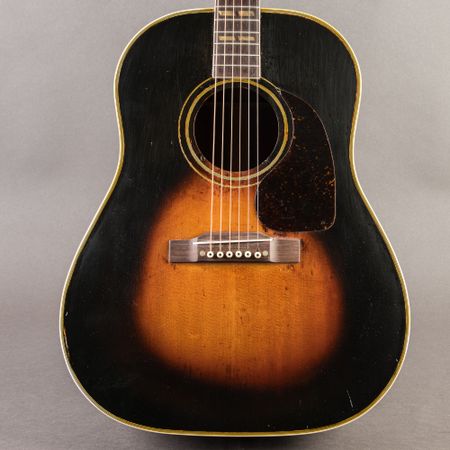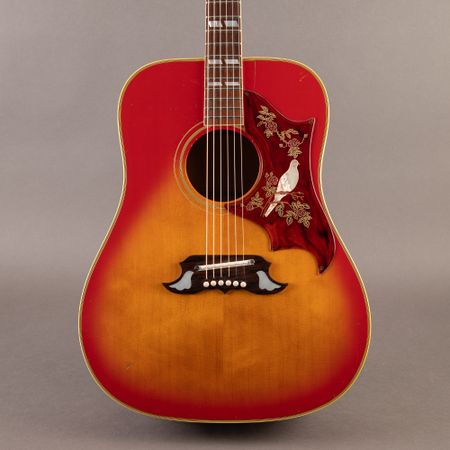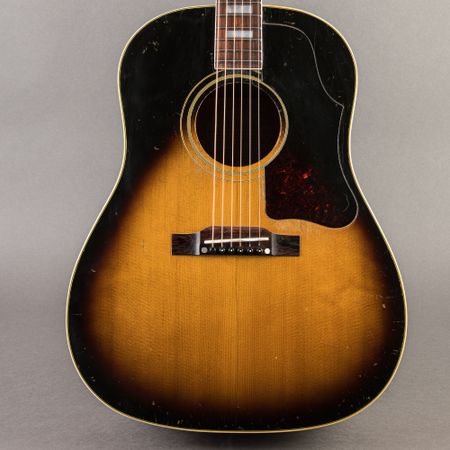

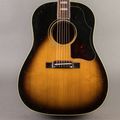
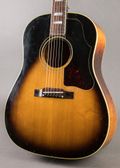
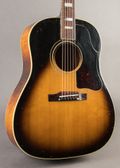
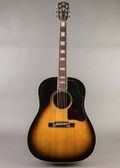
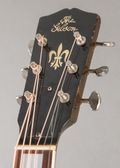
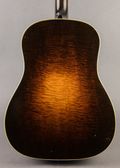
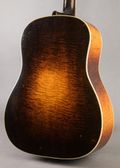
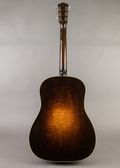
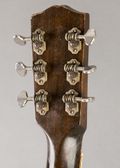
Gibson HG-24 Prototype 1929, Sunburst
$40,000.00


| Instrument | Dreadnought |
| Brand | Gibson |
| Model | HG-24 Prototype |
| Finish | Sunburst |
| SKU | GF11059-A |
| Handedness | Right |
| Made In Year | 1929 |
| Top | Sitka (Factory Re-top) w/ scalloped bracing |
| Back and Sides | Maple |
| Neck/Fingerboard | Mahogany/ Brazilian Rosewood (Replacement) |
| Neck Profile | Soft V |
| Neck Depth | .922" - 1.053" |
| Fingerboard Radius | 12" |
| Tuners | Original Grovers (with one replaced ferrule) |
| Bridge | Brazilian Rosewood (1950s) |
| Scale Length | 24.9" |
| Nut Width | 1.71" |
| String Spacing at Saddle | 2.185" |
| Contains Brazilian Rosewood (Y/N) | Y |
| Case | 1980s HSC |
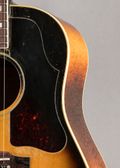
| Modifications/Repairs | Replacement G ferrule, strap button added, 1956-1959 factory retop (Sitka), scalloped X-bracing with additional tuning relief cuts, late 1950s batwing pickguard reglued , 2 light pickguard shrink related cracks (2 small cleat), reglued belly-up bridge with thin wings, 1950s truss rod cover screws, center seam crack (5 cleats), full light overspray and touch-up (even on refinished top), replacement pins, CVG refret on a potentially replaced BRW fingerboard, small spot of chip out on neck block |
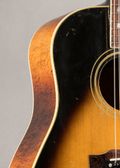
| Condition Notes | Pick wear around soundhole, finish reaction on bass side shoulder |
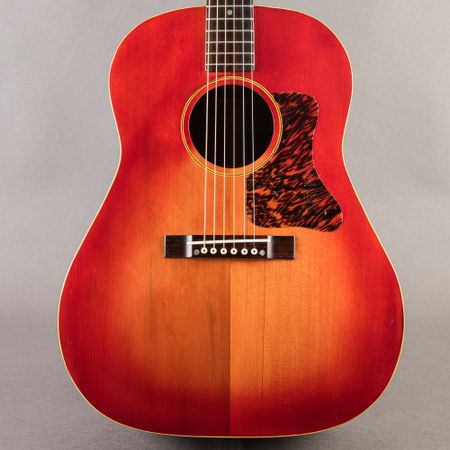
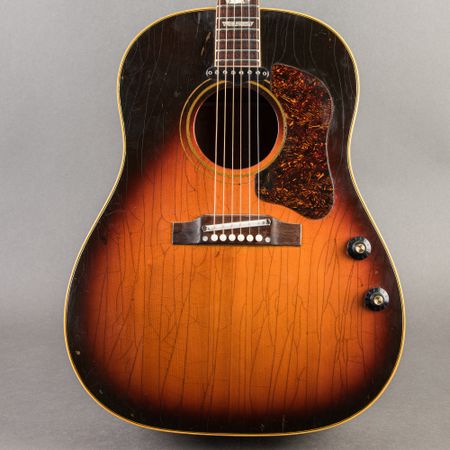
This 1929 Gibson HG-24 Prototype represents a fascinating glimpse into Gibson's experimentation during the late 1920s, a period when the company was actively refining its flat-top guitar designs. Surviving prototype instruments from this era are uncommon, and this example carries a particularly layered history through both its original construction and subsequent factory work. Most notably, the guitar allegedly received a factory retop in the 1949/1950 time range, fitted with a Sitka spruce top and scalloped X-bracing as commonly used during this time. It was also likely during this visit, the fingerboard was replaced (from its original ebony with larger block inlays). The top's finish, drop in saddle bridge, and dark red batwing pickguard suggest that the guitar was sent back for work by the Gibson factory in the 1956/57 time frame. The fusion of art deco and country western design create quite the flair.
Over the decades, the instrument has undergone maintenance and restoration to keep it afloat. Repairs and updates include a reglued belly-up bridge, reglued late-1950s batwing pickguard, replacement pins, replacement G-string ferrule, strap button installation, and a recent in-house refret. Additional work includes repair of a center seam crack, two minor shrinkage cracks adjacent to the pickguard, and a refinish of the replacement top. The result is a historically significant Gibson that tells a complex story spanning multiple eras of the company's development, from its original prototype origins through its mid-century factory alterations and continued preservation into the present day.
Includes 80s hard shell case.